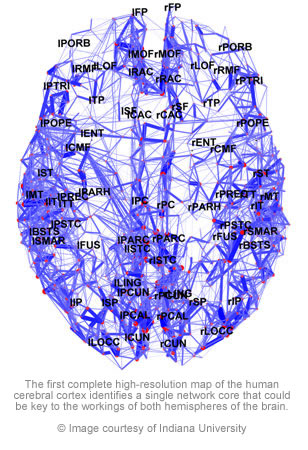
Kwabena Boahen wants to understand how brains work — and to build a computer that works like the brain by reverse-engineering the nervous system. His group at Stanford is developing Neurogrid, a hardware platform that will emulate the cortex’s inner workings.
Imagine, for a moment, that you are facing a very difficult decision about which of two job offers to accept. One position offers good pay and job security, but is pretty mundane, whereas the other job is really interesting and offers reasonable pay, but has questionable job security. Clearly you can go about resolving this dilemma in many ways. Few people, however, would say that your decision should be affected or influenced by whether or not you resisted the urge to eat cookies prior to contemplating the job offers. A decade of psychology research suggests otherwise. Unrelated activities that tax the executive function have important lingering effects, and may disrupt your ability to make such an important decision. In other words, you might choose the wrong job because you didn’t eat a cookie. Read more
False beliefs are everywhere. Eighteen percent of Americans think the sun revolves around the earth, one poll has found. Thus it seems slightly less egregious that, according to another poll, 10 percent of us think that Senator Barack Obama, a Christian, is instead a Muslim. The Obama campaign has created a Web site to dispel misinformation. But this effort may be more difficult than it seems, thanks to the quirky way in which our brains store memories – and mislead us along the way.
Link to read more Source:American Psychological Association , International Herald Tribune June 30,2008